Australia Housing 2026: Growth Slows to 5% After 8–9% Run
A Slower, Steady Market Ahead: What Buyers Should Know
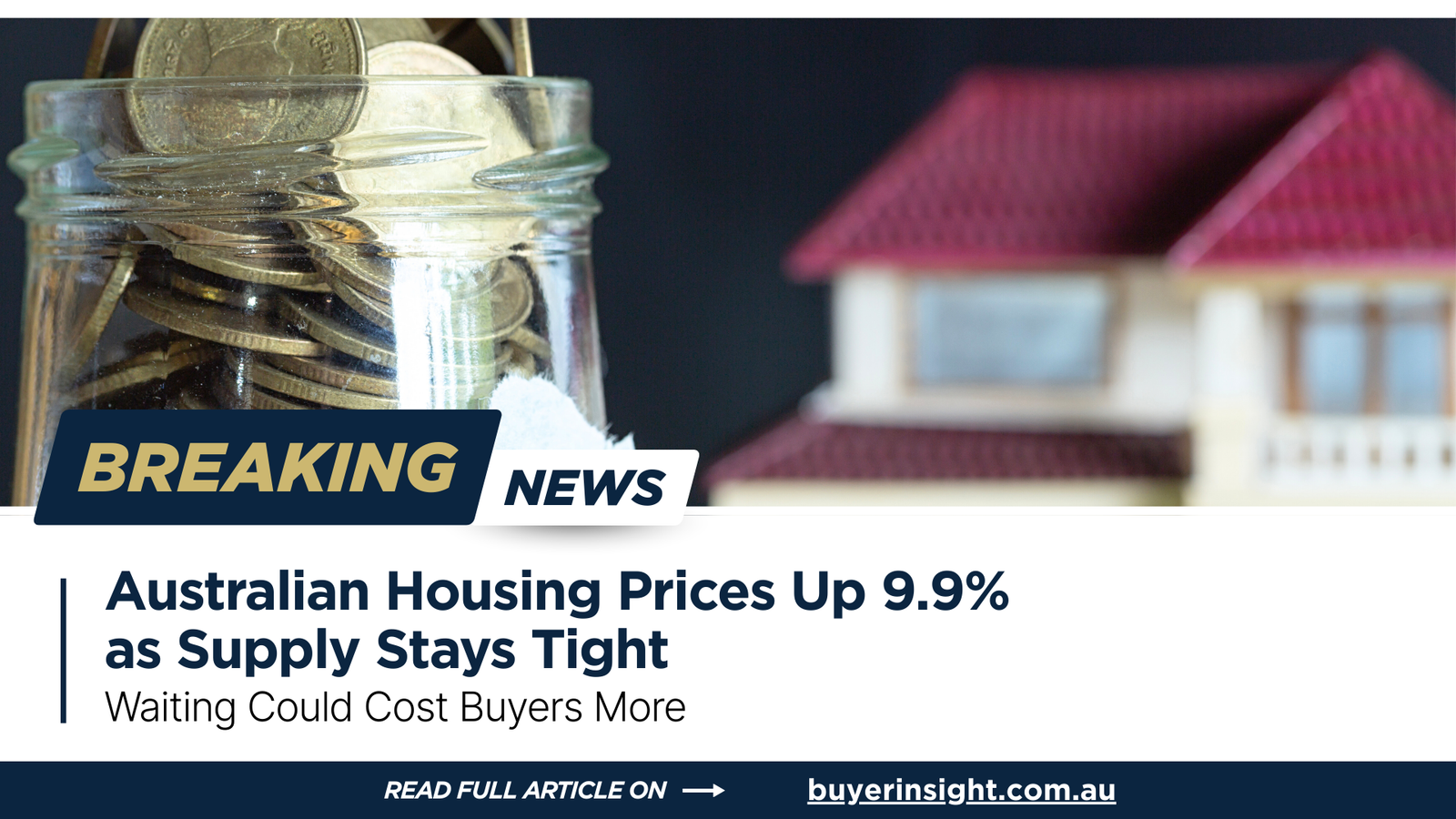
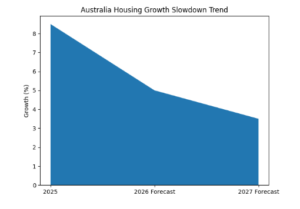
Australia’s housing market had a roaring 2025; national prices jumped roughly 8–9%, but forecasts now point to a cooler outlook. Major banks (CBA, ANZ, NAB, Westpac) expect national growth to slow to about 5% in 2026 and around 3–4% in 2027. Importantly, no capital city is expected to see outright price falls over the next two years. Instead, conditions will vary by city: Perth and Brisbane have been the hottest markets recently, while Sydney and Melbourne show signs of topping out. Borrowing costs have risen (with RBA rate hikes in Feb 2026 and expected in May), and affordability is very tight (the national median home is now over 8× the average income). These headwinds will drag on price growth.
Big Banks Diverge on City Outlooks
The CBA and Westpac agree on the broad slowdown, but differ on which cities win. CBA sees Perth and Brisbane continuing double-digit growth in 2026 (about +15% and +12%), driven by “strong market momentum, tight supply-demand balance, and robust local economies”. However, even CBA expects that boom to fade; by end‑2027 Perth and Brisbane would slow to ~4% growth. In contrast, Westpac is more cautious: it forecasts only ~7–8% growth in 2026 for those cities, noting that stretched affordability will curb demand even with very low vacancies.
For Sydney and Melbourne, both banks see much softer outcomes. CBA expects just ~2% growth in Sydney and ~1% in Melbourne in 2026, rising to only ~3–2% by 2027. High prices mean many Sydney buyers are “priced out”, few households can afford a $1.6M home, and even Melbourne’s rebound is “nuanced” despite its lower base. Westpac similarly predicts Sydney will be “flat in real terms” (around 3% nominal) and Melbourne only 4–6% in 2027. In practice, affordable suburbs and middle-ring areas in these cities are outperforming while the most expensive pockets cool.
What This Means for Buyers and Investors
Mid-sized capitals remain opportunities. Perth and Brisbane still have momentum thanks to very low supply. Perth listings are ~40% below normal, and Brisbane is similarly tight, keeping competition fierce. That supports rents (great for investors) and means price growth will continue in 2026, albeit at a slower pace. If you missed out on the first surge, there’s still room to grow, but remember growth won’t be double-digit forever. By 2027, more buildings and a settling population growth (post-COVID migration) should ease pressure.
Affordability shapes your plan. With homes now costing ~8 times average income, even a low rate rise sharply cuts borrowing power. Budget carefully: factor in the RBA’s recent and expected hikes, and use tools like our Borrowing Capacity Calculator to see how much you can afford. Also, remember helpful schemes: the First Home Guarantee (5% deposit) and other grants are supporting lower-priced segments.
Long-term demand is still intact. Population and incomes aren’t collapsing. Australia is still growing, just more slowly. Employment is solid, and migration will rise again. Meanwhile, housing supply is only now catching up after years of under-building. In other words, we still need more homes. If you’re patient, slower growth means you won’t miss a steep upswing, and prices aren’t expected to crash. It’s a time to pick your entry point carefully, consider value-growth suburbs and lock in current rates before any further rises.
Ready to act on these insights? At Buyer Insight, we help first-home buyers and investors understand how market trends and policies affect them. We can walk through your new borrowing power, loan choices, and scheme eligibility in simple terms. Call us on 61 468 444 478 or book a free 30-minute consultation to get tailored advice. Follow us on Instagram and connect on LinkedIn for more property market updates and tips.