$10bn Housing Future Fund in 2026: When New Supply Reaches Buyers
Australia’s $10bn Housing Future Fund: What Buyers Need to Know
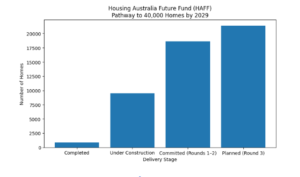
The Albanese government’s new Housing Australia Future Fund (HAFF) is a $10 billion program to build 20,000 social and 20,000 affordable homes over five years. So far, the first two funding rounds have locked in 18,650 homes (279 projects) for people in need – about 889 completed and 9,501 under construction. Round 3 of the fund opened on 30 January 2026 and will provide the remaining 21,350 homes needed to hit the 40,000 target by 2029. In practical terms, this means more housing supply is on the way, but slowly. All these new homes are scheduled to be built from 2027 onwards, so any market impact will be years in the making.
Round 3 Key Details
Round 3 aims to accelerate delivery through partnerships and focused streams. Key points:
- 21,350 homes to go: This round will fund the remaining homes needed to reach the 40,000‑home goal.
- Jan 30, 2026 launch: The funding call opened on 30 January 2026, in an open, non‑competitive process (applicants can submit proposals at any time until funds are used).
- 1,200+ per state: It guarantees at least 1,200 homes in each state/territory, ensuring a nationwide distribution of projects.
- First Nations focus: $600 million is set aside for First Nations housing organisations, and at least 10% of all new social homes must be for First Nations households (helping meet Closing the Gap goals).
- Timeline – keys from 2027: The fund specifically targets “keys in doors” as soon as possible. Rolling completions start in 2027, with all dwellings due by mid‑2029. Projects are chosen for their value-for-money and long-term community benefit.
What This Means for Buyers
From a buyer/agent perspective, it’s great to see new homes coming, but remember: supply relief is gradual, not immediate. The HAFF homes (mostly new social or affordable units) won’t hit the market for a few years. In fact, fewer than 900 homes are complete so far, and the rest are in planning or building. So in the near term, the property market will remain tight. Demand still outpaces supply in most areas, keeping prices high – especially since these new units are earmarked for lower-income renters rather than the broader market.
Buyers should take a local view, not national headlines. Impacts will be location‑specific: if a Round 3 project is in your suburb, you might see some relief down the track; otherwise, your market probably won’t change much. As a buyer’s agent, we advise watching micro-markets: check local vacancy rates, housing stock, and upcoming developments. Some easing of pressure is likely at the cheaper end of rentals (more social housing means slightly more low-cost rooms for rent), but don’t expect house prices in hot markets to suddenly fall.
- Supply boost is slow: Deliveries only ramp up from 2027, so expect tight conditions for a few years yet.
- Tight market persists: Nationally, experts still see a housing shortage. Median prices keep rising while new stock trails population growth. Don’t assume prices will crash anytime soon.
- Local factors rule: Benefits vary by suburb. A coastal city or commuter town with new projects might feel pressure ease more than a built‑up inner suburb. Always check local data.
- Focus on fundamentals: For buyers and investors, the best strategy is picking the right suburb and property type for you – not betting on big policy shifts. Use a buyer’s agent to find good value in micro-markets, and keep an eye on local supply trends.
Next Steps
Ready to get started? At Buyer Insight, we help first-home buyers and investors navigate these market changes. Call us on 61 468 444 478 or book a free 30-minute consultation to take the next step. For ongoing tips and updates, follow Buyer Insight on Instagram and LinkedIn.